Ambitious, Atmospheric, and Baffling - "Ghost Light"
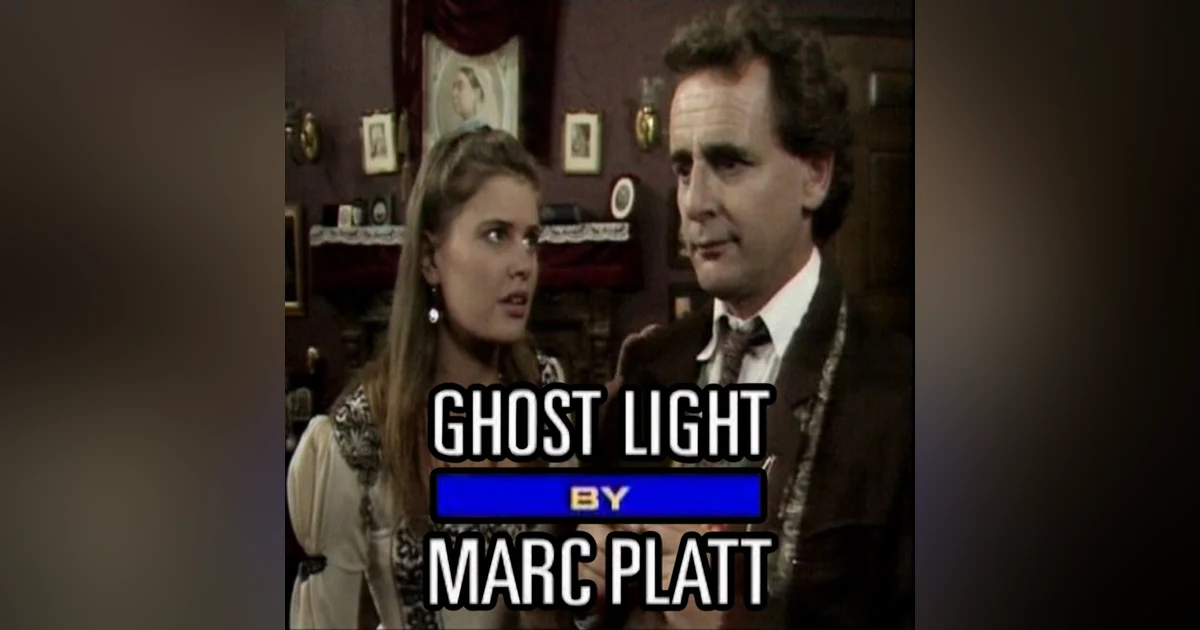
Guest: Felicity Kusinitz from joins John and Jim to discuss Season 26's most confusing story. A Script Too Big for Its Own Shoes Mark Platt submitted "Lungbarrow" to the show—a bold move for a writer with no professional credits beyond Doctor Who...


 Guest: Felicity Kusinitz from the Flopcast joins John and Jim to discuss Season 26's most confusing story.
A Script Too Big for Its Own Shoes
Mark Platt submitted "Lungbarrow" to the show—a bold move for a writer with no professional credits beyond Doctor Who fan fiction. JNT immediately shut down his original concept (a full revelation of the Doctor's origins involving Gallifrey, Rassilon, and Omega) and asked him to rework it. Platt transplanted the thematic weight of that rejected story into a Victorian Gothic setting, creating Ghost Light. The result is a production that was heavily edited, with numerous explanatory scenes cut to fit three episodes. Even now, decades later, the story remains notoriously difficult to follow on first viewing—and according to many, even on subsequent viewings.
Why This Story Rewards (and Frustrates) Repeat Viewing
Felicity came in as a genuine enthusiast for this story, despite her general ambivalence toward the McCoy era. She's watched it multiple times and finds it improves with knowledge of what's coming. The New Adventures novels (particularly "Lungbarrow," which completed Andrew Cartmel's original Master Plan concept) have deepened her appreciation retroactively. Yet even she admits the first viewing is a puzzle box without instructions. Jim, meanwhile, found it nearly incomprehensible—he spent much of the episode laughing at the absurdity while also trying desperately to understand what was actually happening.
Too Many Characters Syndrome Strikes Again
The story suffers from the same overcrowding that plagued Battlefield. There's Josiah Samuel Smith, Control, Nimrod, the Reverend Matthews, the Constable, Mrs. Pritchard, Gwendolyn, the maids, Inspector McKenzie, and eventually Light itself. Each arrival adds another layer of confusion. Jerry Lange's earlier concerns about "too many characters" find their most vindicated expression here. Some characters could have been eliminated entirely, and others—particularly the Reverend and the Constable—feel like they exist only because they were written before the cuts.
A Doctor Who's Getting Darker (And Meaner)
A troubling thread emerges in this viewing: the Doctor is increasingly manipulative and even cruel with Ace. He brings her to a house without explanation, observes her distress as a kind of experiment, and generally treats her as a subject to be studied rather than a companion to be protected. This emotional manipulation—combined with McCoy's alien coldness rather than zany warmth—marks a shift in the character that will come to a head in the final story.
Atmospheric But Muddy: The Audio Problem
The story is visually and aurally striking—genuinely evoking Hammer Horror and the Hinchcliffe era with its Victorian setting and Gothic atmosphere. Yet the production suffers from audio mixing issues. The soundtrack is prominent enough to drown out dialogue, particularly Ace's lines, which are sometimes difficult to parse. This compounds the story's already confusing nature; listeners are struggling both to understand the plot and to hear what characters are saying.
The Incomprehensible Becomes Character-Driven
Once Light arrives—a being of pure energy obsessed with cataloguing life but appalled by its constant evolution—the story gains a genuinely interesting thematic core. Light's childlike wonder and petulant rage when confronted with change creates an intriguing antagonist, even if the costume (flowing cape, pale makeup, styled hair) reads more as "space fairy" than "cosmic entity." The Doctor defeats Light not through action but through argument—a Kirk-like tactic that works here because the concept itself is compelling enough to carry it.
What Works, What Doesn't
The setting works beautifully. The cast interactions (particularly Ace and Gwendolyn's constant wrestling matches) add levity. Sophie Aldred's increasing maturity as an actress and her character's evolution is noticeable. The costume design is excellent—though Ace keeping her boots on under the Victorian dress is a nice character touch. What doesn't work is the clarity; the rushed ending; the revelation that Control, Fenn Cooper, and Nimrod escape in the spaceship (leaving Ace's future burning of the house still unexplained); and the general sense that crucial scenes were left on the editing room floor.
The Crown Jewel of Cartmel's Tenure?
Cartmel considers Ghost Light the crown jewel of his script-editing era—a statement that says more about what went wrong in his tenure than it does about the quality of this particular story. It's bold, daring, and ambitious. It also fails to deliver on its promises due to time constraints and editorial decisions made by people who didn't care anymore. This is the final production of classic Doctor Who, even though it airs second in the season. The actual last scene filmed was the closing exchange between Ace and the Doctor—a conversation that feels almost tacked on but carries genuine weight: Ace wishes she'd blown up Gabriel Chase instead of burning it down, and the Doctor simply replies, "Wicked."
Production Details:
-
Production Code: 7Q
-
Aired: October 4–18, 1989 (but produced AFTER both "Curse of Fenric" and "Survival")
-
Writer: Mark Platt (first professional sale; no prior writing credits outside fan fiction)
-
Director: Alan Waring
-
Original Concept: "Lungbarrow" — a story meant to fully reveal the Doctor's origins on Gallifrey
-
Ratings: Episode 1: 4.2 million | Episodes 2 & 3: 4.0 million (slight bump from previous week)
-
Notable Cast: Michael Cochrane (Fenn Cooper, previously in "Black Orchid"), Carl Forgione (Nimrod, previously in "Planet of the Spiders")
-
Key Detail: Last scene shot was Ace and the Doctor's closing exchange
Key Discussion Points:
-
The 75-minute script cut down to fit three short episodes and what was lost
-
Too many characters introduced with insufficient explanation
-
The Doctor's increasingly manipulative treatment of Ace and what it suggests about his character arc
-
Whether the story rewards repeat viewing or if clarity is impossible
-
The Victorian Gothic atmosphere as the story's greatest strength
-
Light as a conceptual antagonist vs. Light as a costume problem
-
Sophie Aldred's maturing performance throughout Season 26
-
Why Ace's 1983 burning of Gabriel Chase never connects fully to the events of this story
-
Ace keeping her boots on under the Victorian dress as character work
-
The jarring tonal shifts between scenes
-
Patrick Mulkern's assessment that the incoherence lands at Cartmell's feet
Coming Up Next:
Monday (Patreon 178): Music (The Doubleclicks' version of the Doctor Who theme), comics "Darkness Falling" and "Distractions" (prequels to a larger storyline), Memory TARDIS, and a tribute to BBC Books editor Justin Richards, who passed away.
Friday (Patreon Early) / Wednesday (Main Feed): "The Curse of Fenric" (four-parter). Jim handles narration; guest Shagg Matthews joins the discussion.
Hashtags:
#DoctorWho #Season26 #GhostLight #ClassicWho #SylvesterMcCoy #SophieAldred #AmbitionVsExecution #CartmelMasterPlan #MarkPlatt #VictorianGothic #DoctorWhoPodcast


