H.G. Wells and Temporal Mechanics: Defending "Timelash"
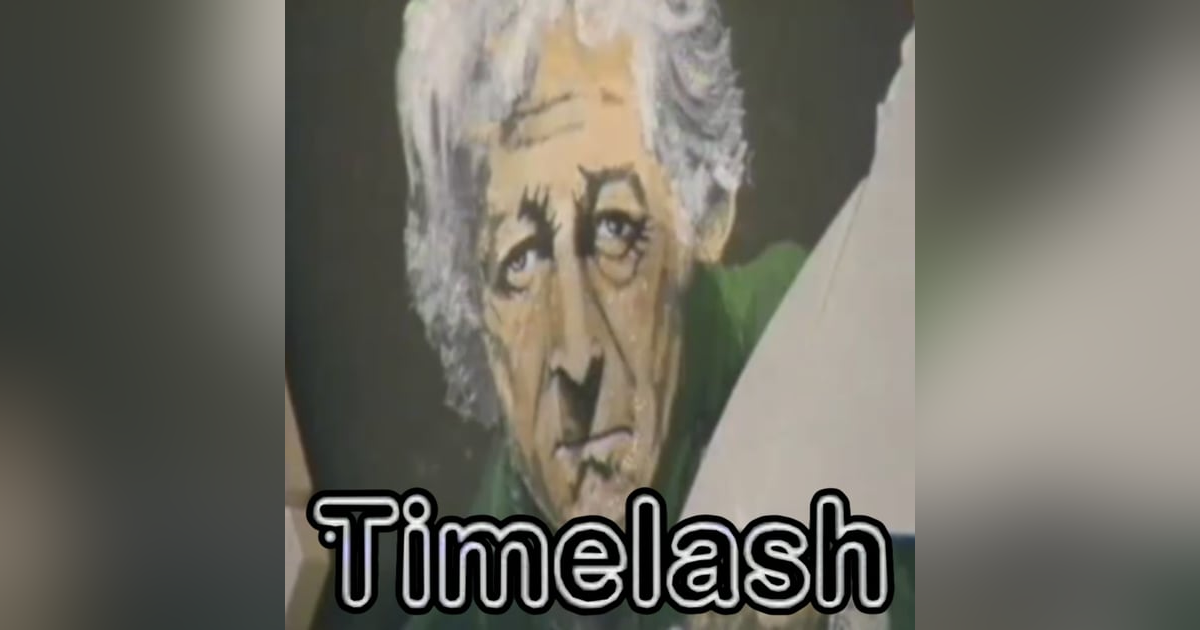


Join hosts John Drew and Jim Beard, along with special guest Alan J. Porter, as they tackle one of Classic Who's most controversial stories - and discover they might be more divided on it than expected!
Production Overview: This 1985 two-part adventure was written by Glen McCoy (his only Doctor Who story) and directed by Pennant Roberts in his final work on the series. The production faced several challenges, including John Nathan-Turner pulling Colin Baker and Nicola Bryant out of rehearsals twice - once for a US convention and once for pantomime rehearsals. Robert Ashby's Borad makeup took three hours to apply daily and prevented him from eating, though he was given creative freedom to rewrite his own dialogue. The story originally featured the First Doctor, Susan, Ian, and Barbara, but was changed to reference the Third Doctor and Jo Grant at JNT's insistence.
The Paul Darrow Factor: Guest star Paul Darrow (Blake's 7's Avon) deliberately over-acted as revenge for Colin Baker's bombastic portrayal of Bayban the Butcher on Blake's 7. When JNT asked him to play Tekker like Avon, Darrow refused and instead played him like Richard III - even asking if he could wear a hump! Eric Saward described the character as "a Roman Emperor who's been sniffing glue all day."
Fan Reception vs. Host Opinions: Despite ranking 199th out of 200 in Doctor Who Magazine's 2009 poll (just above "The Twin Dilemma"), the hosts find themselves surprisingly divided. Alan defends the story as one of his favorites, particularly praising the H.G. Wells subplot and the Doctor's use of temporal mechanics. Jim finds it uneven but leans more positive than negative, enjoying Part 2 more than Part 1. John remains the dissenting voice, giving it his lowest rating and arguing it should have been condensed to a single episode.
What Works:
-
The Borad's makeup design and Robert Ashby's restrained performance
-
The Doctor actively using time manipulation as a tool (the "time slip" device)
-
The Third Doctor/Jo Grant backstory and photo reveal
-
H.G. Wells as Herbert, with the reveal of his identity
-
The Bandril aliens as an attempt at something visually different
-
Colin Baker's performance showing the Doctor's arrogance and self-assurance
-
Peri's relatively conservative and flattering outfit
-
The concept of time technology used as a weapon (aging doors, etc.)
-
References to the Doctor being President of Gallifrey
What Doesn't Work:
-
Twenty-one minutes before the TARDIS actually arrives on Karfel
-
Excessive padding, particularly the extended TARDIS arguing scenes
-
The "Morlocks" name being too on-the-nose from H.G. Wells' "The Time Machine"
-
Plot holes regarding mirrors, reflective surfaces, and androids
-
The unnecessary subplot about the impending Bandril war
-
The clone reveal feeling like a tired trope
-
Peri's character arc diminishing from agency to damsel in distress
-
Questions about how the Doctor knew there was a mirror behind the mural
-
The Borad's similarity to Davros (wheelchair, arm weapon, disfigurement)
Behind the Sofa Reception: Interestingly, all three Behind the Sofa pairings enjoyed the story, with Janet Fielding calling it the best of Season 22 and Peter Davison saying it was "bad enough to be good."
Special Effects: The Blu-ray release is the only Colin Baker Season 22 story to receive updated special effects, particularly within the Timelash corridor itself. However, the hosts debate whether the original effects were actually any worse than typical for the era, with some defending them as perfectly acceptable for 1985.
The Third Doctor Connection: The story's references to an unseen Third Doctor adventure generate discussion about whether this needs to be explored further. Some Big Finish audios and novels have addressed different aspects of this backstory, though no single story covers the complete adventure. The reveal of Jo Grant's photo in the locket creates a memorable moment, though questions remain about the logistics of the wall/mural/mirror setup.
Colin Baker as the Sixth Doctor: All three hosts praise Colin Baker's performance, with discussion about how he represents a return to the "classic" Doctor archetype - combining arrogance, self-assurance, and alien behavior in ways that callback to earlier incarnations. Alan notes that the Sixth Doctor has become his favorite classic Doctor, particularly in Big Finish audios where the character develops further. Jim agrees that Baker brings back an edge and arrogance that had been missing from the Fifth Doctor's portrayal.
H.G. Wells Subplot: The reveal of Herbert as H.G. Wells divides the hosts. Alan loves this aspect and wishes Wells could have become a companion, noting that expanded media has hinted at further travels with the Doctor. The hosts discuss the 1979 film "Time After Time" covering similar territory. The Loch Ness Monster connection provides a subtle Easter egg at the story's conclusion.
Nicola Bryant's American Accent: The discussion reveals interesting perspectives - Alan, who lived in Britain during the original broadcast, thought she was genuinely American for years. Now living in the US for 30 years, he can hear her straining with the accent. The hosts share the behind-the-scenes story of how Bryant and her agent maintained the deception for nearly a year before revealing the truth to Colin Baker.
The Violence Debate: The hosts attribute Season 22's increased violence to Eric Saward's script editing philosophy and his particular vision of science fiction, suggesting he didn't fully understand the Doctor's character. They note that the 18-month hiatus may have saved the show by allowing time to reassess and tone down the violence.
Production Value Discussion: The hosts debate whether Timelash deserves its reputation for poor effects and production values, with most agreeing the special effects are no worse than surrounding stories. The Timelash corridor interior set receives mixed reviews - an "A for effort" but questioned execution that might have benefited from filters or different lighting approaches.
Viewership:
Part 1: 6.7 million viewers
Part 2: 7.4 million viewers
Coming Up Next:
Patreon Exclusive (Monday): John and Jim cover all three parts of Steve Parkhouse's "Polly the Glot" comic strip, spin the Memory TARDIS, and discuss more theme music variations. The hosts express relief that only two more Parkhouse stories remain in their comic journey.
Next Main Episode: The hosts continue through Colin Baker's Season 22 with "Revelation of the Daleks," featuring the return of Davros. John handles narration duties, and they're joined by special guest Felicity Kusinitz, who has recovered from her previous illness and will bring her "much better voice" to the discussion.
Hashtags:
#DoctorWho #Timelash #ClassicWho #SixthDoctor #ColinBaker #NicolaBryant #Peri #PaulDarrow #BlakesSeven #HGWells #ThirdDoctor #JoGrant #TheBorad #Season22 #1985 #DoctorWhoReview #DoctorWhoPodcast #Whovian #ClassicDoctorWho #TimeLords #TARDIS #TemporalMechanics #GlenMcCoy #PennantRoberts #Karfel #Bandrils #Morlocks