McCoy, the 80s, and Classic Who: The Grand Retrospective
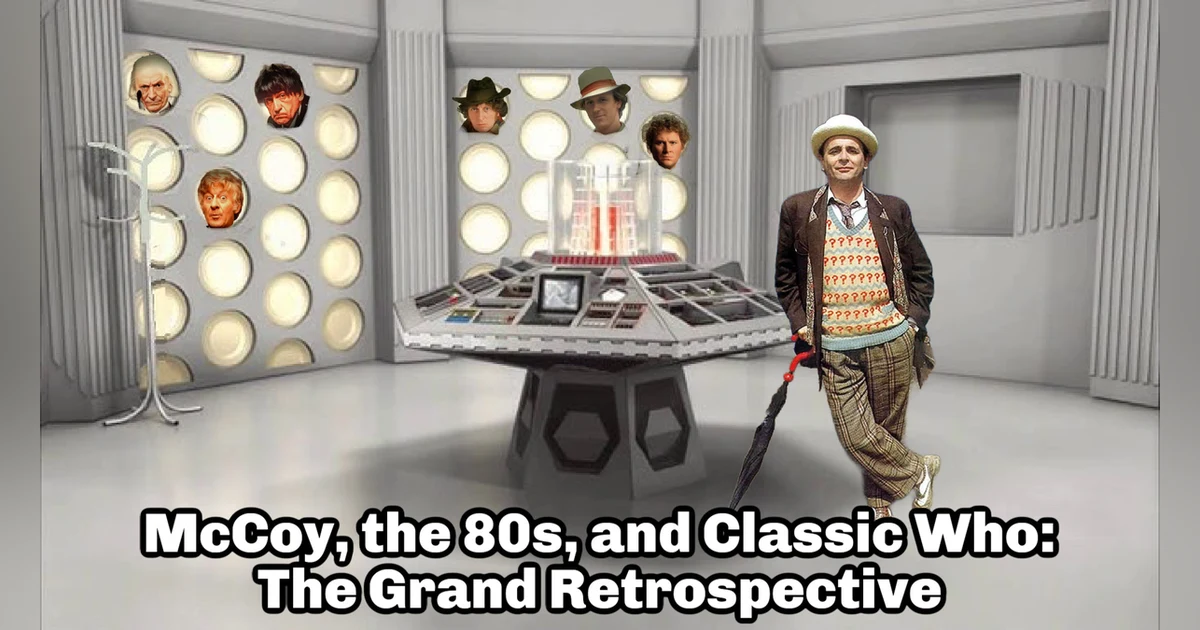
Note: This is a hiatus episode, kicking off our Wilderness Years series for Patreon subscribers. Rather than three separate retrospective episodes that might send listeners running, John and Jim fold the whole reckoning into one: a look at the McCoy...


 Note: This is a hiatus episode, kicking off our Wilderness Years series for Patreon subscribers. Love the podcast? Consider joining us on Patreon for early access to episodes, exclusive content, and the option to commission your own Doctor Who story.
Rather than three separate retrospective episodes that might send listeners running, John and Jim fold the whole reckoning into one: a look at the McCoy era, a widening out to the John Nathan Turner 80s, and finally a rapid-fire superlatives round covering all of Classic Who—plus a pile of statistics for the numbers lovers.
The Square Peg Doctor
The conversation opens with Sylvester McCoy and a genuinely thorny question: after six previous incarnations, what's left to do with the character? The hosts wrestle with McCoy's wild tonal swings—slapstick one minute, psychedelia the next, genuine darkness after that—and whether he was just finding his footing when the axe fell. There's a debate about what one-word label fits him (the Dark Doctor? the Manipulative Doctor? something else entirely?), a discussion of whether he's defined more by his companion than himself, and an honest reckoning with whether another season might have changed everything. Plus: the two greatest actor-companion pairings in the show's history, and why one of them is McCoy and Aldred.
In Defense Of (and Frustration With) the John Nathan Turner Era
The 80s segment doesn't pull punches. The hosts trace JNT's arrival, the new music, the modernized sets, the plum outfit Tom Baker inexplicably loved—and the long, complicated decline that followed. There's a pointed argument about how much blame falls on producers versus script editors, a provocative thesis about who really "killed" Doctor Who, and a fascinating counterfactual: what would 80s Who have looked like without JNT at the helm? The hosts also make the case for the BBC itself as a villain of the piece, and float what might have saved the show (theatrical movies? a UNIT revival tuned to the Reagan-Thatcher era? Benton's return? leaning into other media?).
The Superlatives: All of Classic Who, Rapid-Fire
This is where longtime listeners lean in. Favorite Doctor, favorite companion, favorite story, favorite regeneration, favorite monster and villain, and the most underrated story you'd hand a skeptic—each host makes their picks, and they rarely line up.
Favorite Doctor is an easy call for one host and a predictable-but-defended choice for the other, with a surprising reappraisal of a much-maligned incarnation along the way. Favorite companion comes down to a hard-fought shortlist of three, and one host's winner may surprise people (hint: it's the character he considers "era-less"). Favorite story required whittling down a whole column of top-rated picks to a single title—and one host reveals which two Doctors never earned a perfect score from him. The regeneration question produces one of the episode's most contrarian takes. And the "underrated gem" picks range from a First Doctor historical to a Second Doctor classic to a Fourth Doctor story that shifts genres entirely partway through.
There's also a spirited defense of a Colin Baker story fandom loves to hate, an argument about which creature is the true face of Doctor Who, and a Delgado-versus-Ainley Master debate that lands firmly on one side.
The Statistics
For the data lovers: the most-downloaded episode for each Doctor (some genuinely surprising—one of them is a story you can only half-watch, another is a Baker tale neither host rated highly), the stories that landed in the 14.5-to-15 range (three of the five share a common enemy), the lone story that bottomed out near the very bottom of the scale, and the full ranking of all seven Doctors by average rating. Then both hosts rank the Doctors by personal preference, and discover they line up in exactly one spot.
Production Details:
-
Format: Three-part retrospective (McCoy era / the 1980s / Classic Who overall + statistics)
-
Ratings Scale Discussed: The hosts' 1-to-15 system across the entire classic run
-
Statistical Segments: Most-downloaded episode per Doctor, highest- and lowest-rated stories, full Doctor rankings by average score and by personal preference
Key Discussion Points:
-
Whether McCoy was hitting his stride right as the show ended
-
The "square peg" problem of the seventh incarnation
-
The two best actor-companion relationships in the classic run
-
How much of the 80s decline lands on JNT, the script editors, or the BBC
-
What 80s Who might have looked like under a different producer
-
The all-Classic-Who superlatives and where the hosts disagree
-
Which two Doctors never earned a 15 from one host
-
The Daleks (and Davros) versus the Cybermen as the face of the show
-
The Delgado vs. Ainley Master debate
-
The download statistics and what they reveal about listener interest
-
What the hosts want from New Who as they head into the Eccleston era
Coming Up Next (Patreon):
Next Week: The Paradise of Death—the five-part BBC audio drama reuniting Jon Pertwee, Nicholas Courtney, and Elisabeth Sladen.
The Week After: Dimensions in Time—JNT's last hurrah, the two-part Children in Need charity special.
Then: Whatever Happened to Susan Foreman?—the BBC radio docudrama.
And Finally: Downtime—the fan video reuniting the Brigadier with Sarah Jane and Victoria against the Yetis, before we tackle the 1996 TV Movie.
Monday (Patreon Exclusive 181): Music, Memory TARDIS, and the four-part comic "The Good Soldier" by Andrew Cartmel.
Hashtags:
#DoctorWho #ClassicWho #SylvesterMcCoy #JohnNathanTurner #Retrospective #Superlatives #WildernessYears #DoctorWhoStatistics #DoctorWhoPodcast


