Shadaly Written - "Shada"
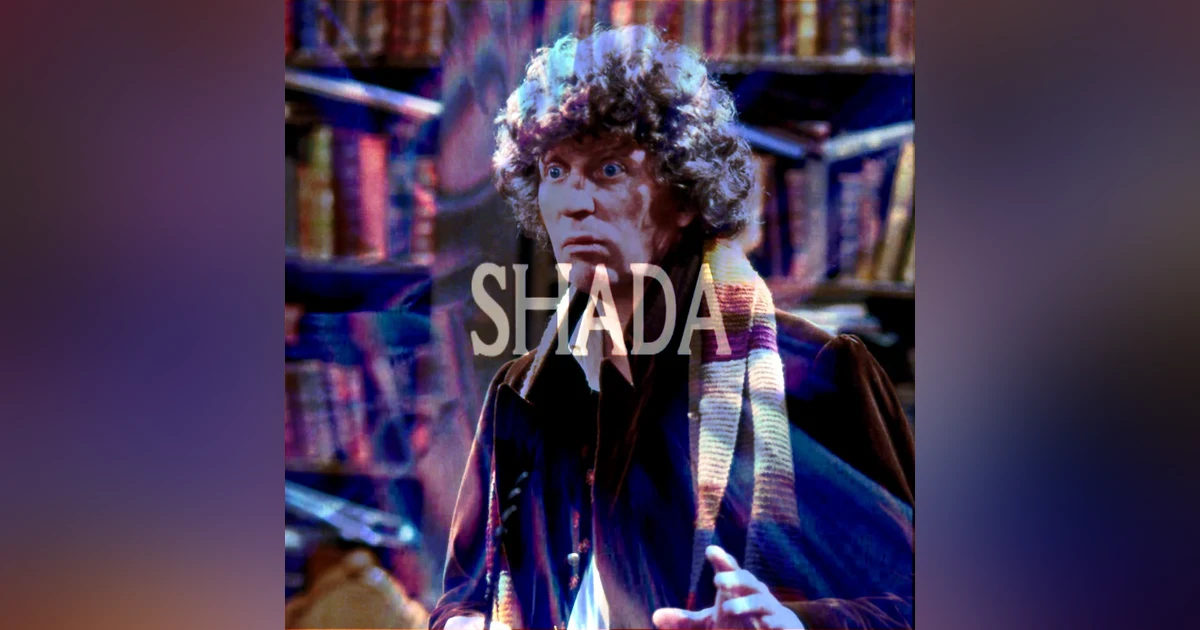


 Note: This is a hiatus episode, originally a Patreon Exclusive, airing on the main feed during the break between Classic and New Who. Love the podcast? Consider joining us on Patreon for early access to episodes, exclusive content, and the option to commission your own Doctor Who story.
A Strike Over a Clock Changes Doctor Who History
The story of Shada begins not on screen, but in the chaos of 1970s British industrial action. A seemingly minor dispute over which union controlled the operation of an elaborate clock on the BBC Children's Program, Play School, escalated to the point where production of Doctor Who came to a standstill. Two-thirds of filming had been completed. Sets were built. Effects work had been shot. Actors had been cast. And then everything stopped. The cast wasn't aware of what was happening behind the scenes—some didn't even know production had ceased until much later. Meanwhile, writer Douglas Adams had already decided to step away from the show. He wouldn't be returning.
The Lost Story That Became Many Stories
Because Shada was never completed in 1980, it exists in five different forms today. A 1983 fan edit using rough footage and text inserts. A 1992 VHS release with Tom Baker providing narration for the unfinished scenes. A Big Finish Flash animation from 2013 that reimagined the story. An unofficial animation created before the official version. And finally, a 2021 Blu-ray restoration with enhanced animation presented in proper episode format. But none of these versions represent what Douglas Adams might have intended, because the original script—if it still exists—has never been published. The editing, the changes, the additions made over decades remain mysterious.
What Was Filmed, What Wasn't, and Why Some Special Effects Exist for No Good Reason
One of the most fascinating aspects of watching Shada is understanding what the production achieved before the strike. All the Cambridge location footage—the punting scenes, the exterior shots of the university, Tom Baker riding a bicycle—was shot first. The interior sets at the professor's rooms were next. But the spaceship interiors? Those were never filmed, because the production never got far enough. Yet special effects models of both spaceships were built and filmed specifically for a story that would never be completed. The Krog robots, partial shots of spacecraft, miniature effects work all survived despite the rest of production falling apart. It's a window into how Doctor Who production actually worked: film everything outdoor or on location first, then work studio interiors later.
A Woman Transformed, A Doctor Leaving, and a Show About to Change Everything
Tom Baker—at this point no longer interested in playing the Doctor again—was paired with Lala Ward (as Romana II). Their relationship during this period was becoming increasingly strained (they would eventually marry and divorce, an 18-month union that left permanent scars). Meanwhile, Graham Williams—the outgoing producer—was frustrated that the BBC wouldn't fund the show properly. He could only get two-thirds of the budget needed. He suggested his replacement: John Nathan Turner, a producer with big ideas and bigger ambitions. Turner would bring in Christopher Bidmead as script editor—someone determined to ground the show in actual science and move away from what he considered silliness. Bidmead would also cherry-pick which parts of established continuity "counted," declaring entire seasons from the past to be non-canonical. This era would define everything that came next.
Cambridge, Tea, and a Story About Wanting to Create a Universal Mind
The story itself involves a professor of Gallifrey, secret books, a man named Skagra with mysterious plans, and a prison planet that the Time Lords conveniently forgot about. But at its heart, it's a tale about someone trying to merge multiple consciousnesses into a single universal mind—a concept that resonates strangely in an era of AI debates decades later. The Doctor opposes this not through violence, but through philosophy, engaging in a debate about why controlling the universe isn't actually desirable. It's quintessentially Douglas Adams: ambitious ideas wrapped in humor and logic puzzles.
Guest Stars Both Familiar and Forgotten
Gerald Campion, who played the original Billy Bunter decades earlier, appears in a small role. Tom Baker was thrilled to work with him. Christopher Neame plays the villain Skagra in a distinctly disco-era outfit that suggests the production was made in a very specific time period. Most of the cast has been forgotten by history—which is what makes it tragic. These actors prepared for a major Doctor Who story that would have been seen by millions. Instead, they prepared for something that was erased.
Romana in Costume, or Rather, in Multiple Costumes
One thread that becomes increasingly frustrating as the story progresses: Romana keeps changing outfits, and none of them seem quite right. There's a hat situation that neither host is happy about. But the core problem goes deeper—Romana, one of the Doctor's most capable companions, spends large stretches of this story being dragged around, held hostage, or forced to watch as events happen around her. It's a companion written with less agency than the show had managed before.
A Mystery at the End: What Was Douglas Adams Actually Trying to Say?
The final revelation that Professor Cronotus is actually Salyavin—a famous criminal from Shada prison—raises questions that the story never adequately addresses. He's dead, sort of. He's a paradox, sort of. He creates a companion (Claire) who suddenly understands alien technology without explanation. And then the Doctor simply... leaves. Leaves a TARDIS on Earth with an unstable former criminal who's slowly fading from existence. No one discusses what will happen. No one seems concerned. By the final episodes, the story becomes increasingly muddled, introducing concepts that don't quite land and resolutions that feel incomplete.
Which Version Did They Watch? And Does It Matter?
The hosts watched the 2021 Blu-ray restoration, broken into six episodes with enhanced animation. But the question lingers: is this Douglas Adams's original story, or has it been altered beyond recognition by decades of reconstruction? The animation is competent but uneven. Tom Baker's and Lala Ward's aged voices are notably different from their younger selves. David Briarley, the original voice of K9's computer, recorded new material shortly before his death. A final scene was added showing Tom Baker as an older man—was this always planned, or a later addition?
A Story in Cotton Candy Form
One host describes Shada as "cotton candy science fiction"—tasty in the moment, completely gone the moment you consume it. The question becomes: how much of the fascination with Shada is about the story itself, and how much is about its impossible history? Had it been completed on schedule and aired as just another season finale, would anyone still talk about it? Or is the legend of Shada more interesting than Shada actually is?
Production Details:
- Production Code: 5M
- Intended Air Date: January 19 – February 23, 1980 (never aired)
- Writer: Douglas Adams (final script for the show; also served as script editor)
- Director: Pennant Roberts
- Cause of Non-Completion: Industrial action/strike regarding union jurisdiction over BBC equipment (ultimately over a clock on a children's program)
- Percentage Shot: Approximately two-thirds
- Versions That Exist: Five distinct versions across different formats and decades
- Key Guest Cast: Gerald Campion (Billy Bunter himself), Christopher Neame (Skagra), Daniel Hill (Chris), Victoria Burgoyne (Claire)
Key Discussion Points:
- The production history and why the strike occurred
- Why special effects were filmed for scenes that were never shot
- The decision to leave Tom Baker out of future multi-Doctor stories (and his later appearance here)
- What happened to Romana's agency as the story progresses
- The muddled explanation of Cronotus/Sally Avon and the paradox he represents
- Whether Shada would be remembered if it had simply aired as scheduled
- How different Doctor Who productions worked (exteriors first, interiors later)
- The implications of leaving an unstable TARDIS on Earth with no follow-up
- Douglas Adams's memos and his frustrations with the show's direction
- The romantic relationship between Tom Baker and Lala Ward during this period, and how it affected their performances
Coming Up Next:
Saturday (Main Feed) / Friday (Patreon Early): Season 18 premiere, "The Leisure Hive" (four-parter). The first story under the new regime begins.
Monday (Patreon Exclusive 120): Season 17 retrospective and mainstream comics coverage for the hiatus period ("Dogs of War," "Time Witch," "The Star Beast").
Hashtags:
#DoctorWho #Shada #TomBaker #LalaWard #DouglasAdams #ClassicWho #LostStory #ProductionHistory #UnfinishedBusiness #DoctorWhoPodcast #WildernessYears


