These Aren't the Time Lords You're Looking For - "Doctor Who and the Daleks and the Seven Keys to Doomsday"
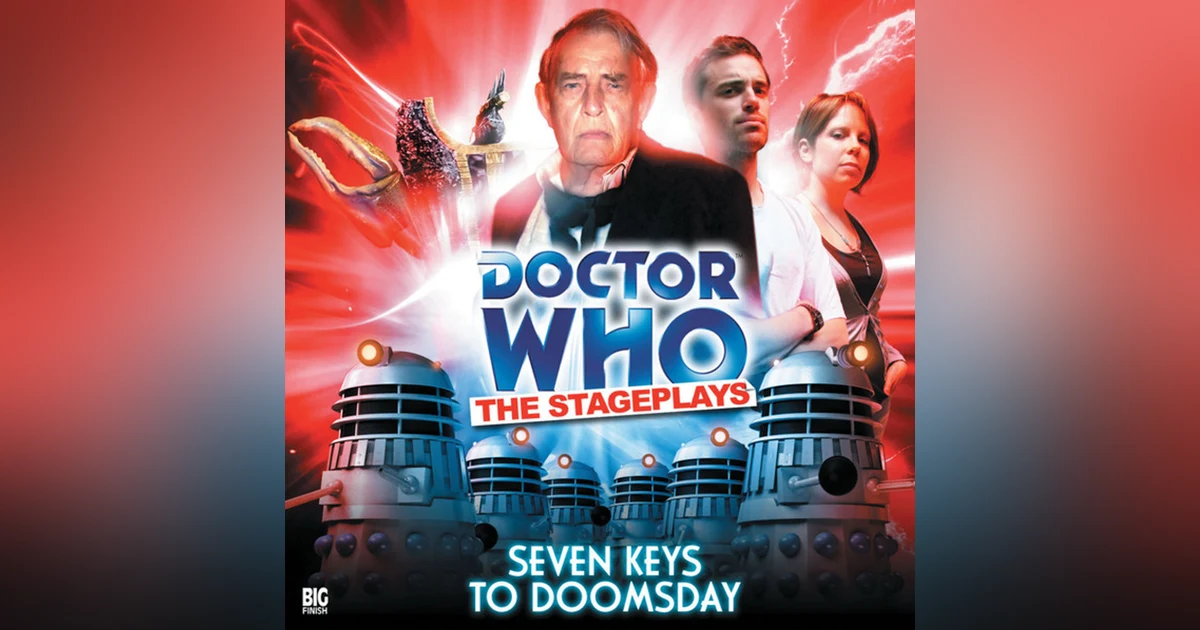


 Note: This is a hiatus episode, originally a Patreon Exclusive, airing on the main feed during the break between Classic and New Who. Love the podcast? Consider joining us on Patreon for early access to episodes, exclusive content, and the option to commission your own Doctor Who story.
When Budget Constraints Force an Impossible Choice
In 1974, the BBC wanted a stage play featuring Doctor Who. Terrence Dicks was brought in to write it. But immediately, a problem emerged: they had money for either John Pertwee (still playing the Doctor on television) or the Daleks. They couldn't afford both. The choice seemed obvious to everyone involved—go with the Daleks. They would draw the audiences. After all, kids coming to see a Doctor Who stage play wanted to see the show's most famous villains. So Pertwee stayed on television, and a new actor named Trevor Martin became the Doctor on stage.
A Regeneration Scene Every Single Night
At the beginning of every performance, the audience witnessed something unique: they saw the ailing Third Doctor (Pertwee's costume, a white wig, his back to the audience) collapse on stage. Above them, a giant screen showed John Pertwee's face slowly morphing via projected slides into Trevor Martin's face. While the audience watched that transformation, Martin was on the stage floor removing the wig and revealing himself as the new Doctor. It was meta theater decades before the term became common—the audience became part of the story.
A Short Run Cut Even Shorter by History
The play premiered December 16, 1974, in London. It received decent reviews, but it was underfunded and ultimately lost money. A planned national tour never happened. Why? The production coincided with the height of IRA bombing threats in London. Theater districts were evacuated. Performances were canceled. Bomb scares shut down entire neighborhoods. In the end, the threats and closures cost the production far more than lack of audience interest ever could.
Lost Media, Lost History
Unlike the BBC television productions, which had photographers documenting them for posterity (leading to the famous Tele-Snaps), no one filmed or even photographed the stage play in any systematic way. The sets, the Dalek designs (which were reportedly different from both TV and movie versions), the TARDIS interior, the lighting design—all of it exists only in the memories of those who saw it and the words of the script. No one bothered to record it for posterity. By contrast, the 1989 stage production "The Ultimate Adventure" (with Pertwee and later Colin Baker) was filmed and preserved. In the 1970s, apparently the thought never occurred to anyone.
A Casting Callback You Might Not Expect
Trevor Martin, the stage Doctor, had previously appeared in Doctor Who television—he was one of the three Time Lords who banished Patrick Troughton to Earth in "The War Games." So he wasn't unknown to Doctor Who production. More interestingly, Wendy Padbury (Zoe from the Second Doctor era) played Jenny in the original stage production. For the 2008 Big Finish audio adaptation, her daughter Charlie Hayes played Jenny, creating a direct lineage from the original theatrical performance to the modern audio drama.
The 2008 Adaptation: A Faithful Recreation of an Unseen Original
Terrence Dicks was brought in to adapt his own 34-year-old script for Big Finish. The producer John Ainsworth asked if Dicks wanted to make changes. Dicks said no—he tightened a few things for pacing, but the dialogue and structure remained essentially what he wrote for the stage. For the audio, they brought Trevor Martin back to reprise his role. They also brought in Nicholas Briggs to voice the earlier regeneration of the Doctor (the Pertwee version briefly heard at the top).
Questions of Canonicity That May Never Be Answered
Unlike Peter Cushing's film Doctors, who exist in an alternate universe and were later acknowledged in New Who, the stage Doctor and this play exist in a strange limbo. The play was never televised. It's not part of the main canon. Trevor Martin and this incarnation don't appear in anniversary specials. When the Thirteenth Doctor sees echoes of previous incarnations in "The Power of the Doctor," this Doctor isn't among them. So where does he fit? Nowhere official. He's canon in the same way Big Finish's licensed audio productions are canon—for those who accept them as such, and for no one else.
A Story That Desperately Wants to Be Seen, Not Heard
Both hosts find themselves wrestling with the same fundamental problem: Doctor Who works best as a visual medium. Listening to a stage play script without knowing what the production looked like—how they solved the problem of the TARDIS materializing and dematerializing on stage, how they managed Dalek movement in a live theater setting, what the alien planet actually looked like—creates a void of imagination that the audio alone can't fill. The hosts spend considerable time wondering about these production details rather than focusing on the story itself.
An Interesting Question That's Never Been Asked
One conversation point emerges that becomes surprisingly fascinating: has there ever been a female Dalek? In 60 years of Doctor Who—television, audio, novels, comics—no one has ever given a Dalek a female voice. During this adaptation, Jenny (a female character) ends up inside a Dalek casing and must speak with the Dalek modulation. For the first time in Who history, listeners hear what a female Dalek sounds like. The hosts wonder why this idea has never been explored in official productions, and discuss what an "Empress Dalek" might mean for Dalek mythology.
Production Details:
- Original Stage Play Premiere: December 16, 1974 (London)
- Writer: Terrence Dicks
- Original Director: Mick Hughes
- Original Cast: Trevor Martin (the Doctor), Wendy Padbury (Jenny), various supporting actors
- Reason for Short Run: IRA bombing threats and theater closures in London; planned national tour canceled
- Big Finish Audio Adaptation: October 2008
- Audio Director: John Ainsworth
- Audio Cast: Trevor Martin (reprising the Doctor from 1974), Charlie Hayes (Jenny, daughter of original Jenny actress Wendy Padbury), Nicholas Briggs (Pertwee's Doctor in voiceover)
- Runtime: Presented in two parts (~50 minutes, ~30 minutes)
- Status: Not considered canon to main Doctor Who timeline; exists as a Big Finish exclusive
- Budget: £5,000 (estimated for original stage production)
- Surviving Documentation: Script only; no film, video, or systematic photography of the original production
Key Discussion Points:
- The forced choice between Pertwee and the Daleks, and why the Daleks won
- The nightly regeneration scene as audience participation theater
- Why no one recorded or photographed the original stage production
- The impact of IRA bombing threats on the production's survival
- How Trevor Martin's previous Doctor Who appearance affects viewing of this role
- The significance of Wendy Padbury's daughter playing Jenny in the audio
- Why a female Dalek voice is notable and why it's never been done before
- The story vs. the production: what we're missing by only having audio
- The canonicity question and how it differs from Peter Cushing's Doctor Who films
- Whether the play would have continued if it had been financially successful
Coming Up Next:
Monday (Patreon Exclusive): We discuss "Lux" from the Ncuti Gatwa era. Jim handles narration.
Wednesday (Patreon Exclusive): Music, Memory TARDIS, and comics including a story from the Doctor Who Annual from 1966 featuring "Mission for Duh."
Friday (Patreon Early) / Saturday (Main Feed): Season 17 premiere, "Destiny of the Daleks" (four-parter)—Tom Baker's penultimate season begins.


